
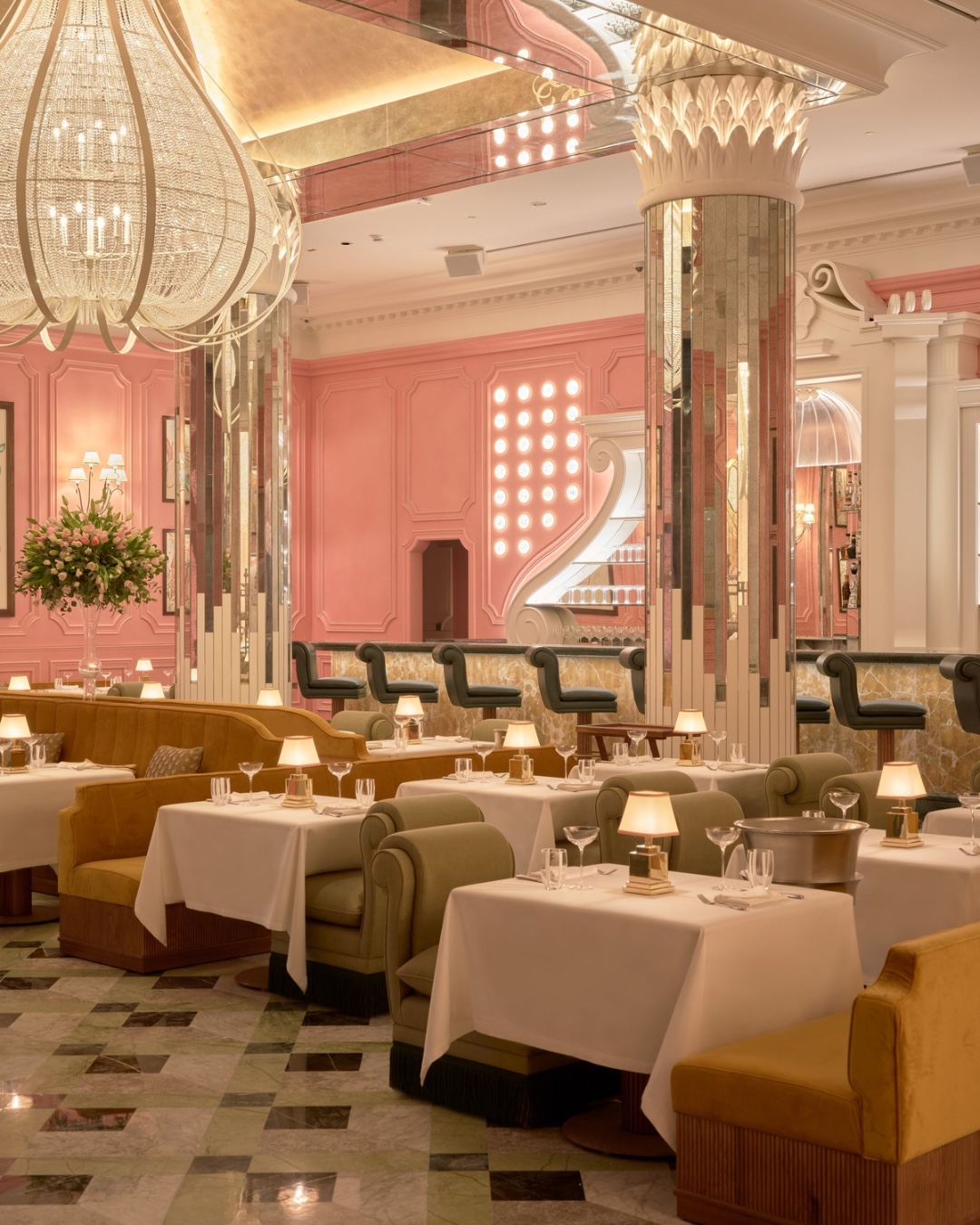
From Penfolds Magill Estate to some of the world’s most recognisable dining rooms, Australian lighting company NEOZ has helped redefine the humble table lamp.
MELBOURNE, AUSTRALIA | NOVEMBER 2026
There’s a lot that goes into making a restaurant feel right. The food, the wine, the music and the service all have their part to play. Then there are the smaller details that often go unnoticed, despite making a considerable difference to the experience. The lighting is one of them.
Today, cordless table lamps are practically everywhere. From neighbourhood wine bars to fine dining institutions, they’ve become a familiar feature of modern hospitality. But long before they were commonplace, Australian lighting company NEOZ was developing a solution to a problem restaurants had been working around for years.

It began at Penfolds Magill Estate, where designer Peter Ellis set out to create a table lamp that would give the restaurant greater flexibility in arranging its dining room. Traditional lighting relied on electrical cords and power points, restricting where tables could be positioned. Ellis wanted to remove those limitations, but the battery technology required wasn’t available in a suitable form. So, he developed his own.
The result was the original Magill, a cordless table lamp designed specifically for fine dining. Yet removing the cord was only part of the challenge. The lamp also needed to provide consistent illumination throughout service, withstand regular handling and remain practical for staff.
“It had to function as a piece of professional lighting equipment, not simply a beautiful object with a battery inside,” explains Gabriel Tam, Design Manager at NEOZ.
That philosophy continues to influence NEOZ’s approach to hospitality lighting, where design and functionality are given equal consideration. What began as a practical solution helped establish an entirely new category of lighting that would eventually become a fixture in restaurants around the world.
Of course, creating a cordless lamp is one thing. Creating light that genuinely improves the dining experience is another. Anyone who’s struggled to read a menu in a particularly dim restaurant will appreciate the balance between atmosphere and functionality. Too much light can make a room feel clinical, while too little leaves guests struggling to appreciate what’s in front of them.
For Tam, good hospitality lighting is about creating the right quality of light in the right place. A table should be comfortably illuminated without overwhelming the broader atmosphere of the room. NEOZ’s current lighting technology offers both a warm 2600K setting and a softer 1800K candle-like glow, giving designers flexibility in shaping the mood of a space.
Colour rendering is another consideration, particularly where presentation is integral to the experience. NEOZ’s current light engine has a Colour Rendering Index of 93+, helping food retain its natural appearance, glassware maintain its sparkle and skin tones appear as they should.
“The intention is to create a pool of light at each table while allowing the rest of the room to retain its depth and atmosphere,” Tam explains.

While cordless lighting has become increasingly accessible, Tam believes restaurants often underestimate the practical considerations involved in choosing the right system. Battery life might be the first thing that comes to mind, but charging infrastructure, durability, maintenance and consistency across a dining room are equally important.
“We find that operators often underestimate just how much sits behind a cordless lamp. The lamp is only one part of a much larger lighting system,” says Tam.
Rather than relying on individual charging cables, NEOZ offers systems that allow multiple lamps to be charged together. Replaceable components and serviceable designs help extend their working life, while water and dust resistance are important considerations in busy hospitality environments.
Even theft has become part of the design conversation. As cordless lamps have grown in popularity, their portability has made them attractive to guests looking for an unconventional souvenir. NEOZ’s response is the Cordless Lamp Lock, a discreet system that secures lamps to tables without compromising their appearance.
Beyond the operational considerations, NEOZ’s work demonstrates how table lighting can become an integral part of a restaurant’s visual identity. At Carbone Riviera, located within the Bellagio in Las Vegas, the company’s Victoria lamps were customised specifically for the project. Painted bases and bespoke lampshades complement the surrounding interior, allowing the lighting to become an extension of the restaurant’s design rather than simply an accessory.
It’s an approach NEOZ has embraced through its in-house customisation capabilities, working with designers to develop different colours, materials, shades and accessories, or entirely bespoke lighting pieces where required.
At Ochre in London, designed by Red Deer, the approach is considerably more restrained. The restaurant features NEOZ Cooee lamps, whose understated forms and warm pools of light create a subtle rhythm across the dining room. Rather than making a strong visual statement, the lamps quietly define each table while allowing the broader interior to take centre stage.
The contrast between the two projects demonstrates the versatility of considered lighting design. At Carbone Riviera, the lamps are an expressive part of the restaurant’s identity, while at Ochre, they contribute to the atmosphere through repetition and restraint. In both cases, the lighting shapes not only how the dining room looks but how it feels to spend time there.

Hospitality has always been an industry built around details. The weight of a wine glass, the comfort of a chair, the music playing in the background and the way a room changes as the evening progresses all contribute to the experience.
What began as Peter Ellis’s solution to a practical problem at Penfolds Magill Estate has evolved into a specialised approach to hospitality lighting, one that considers everything from battery performance and colour rendering to the relationship between a lamp and the architecture around it.
For NEOZ, the objective remains much the same as it was with the original Magill: create lighting that works for the people operating the restaurant, enhances the experience for those dining in it and feels like a natural part of the space.
Because when the lighting is right, most guests won’t give it a second thought. They’ll simply order another glass of wine and stay a little longer.
Discover more about NEOZ and its hospitality lighting collections.